AI is not a tool issue – it changes our leadership culture.
AI is not just a tool topic - it changes our leadership culture
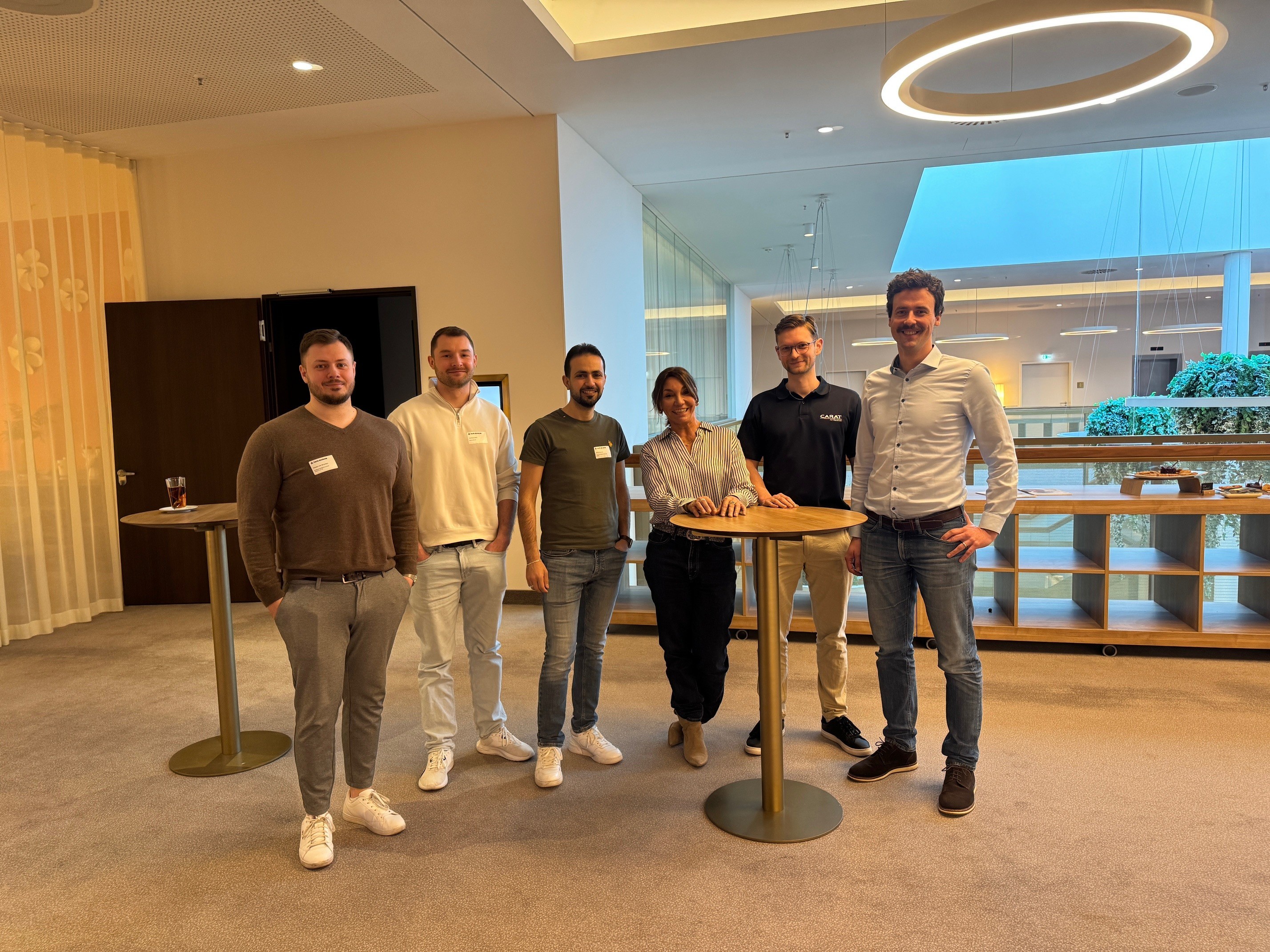
For two days, I held a seminar in Stuttgart on the topic of team development and AI. The location was chosen rather pragmatically - a hotel right by the airport. However, the group was anything but ordinary: ten leaders from very different industries, from various generations, and with a wide range of experiences in dealing with AI.
It quickly became clear that they all shared a similar question. Not so much which tools are currently available or which applications are particularly powerful. But rather: What does this development actually mean for our work, our teams, and ultimately for our role as leaders?
In many organizations, the engagement with AI currently starts in a very technical way. Applications are examined, initial tools are tested, and discussions are held about productivity gains or efficiency increases. This is understandable, as technology initially appears as an instrument that one can introduce and use.
Yet in practice, something else becomes evident again and again: AI is definitely not just a tool topic and should not solely rest in the hands of technology experts! AI is primarily a matter of mindset and culture.
Between curiosity and uncertainty
In Stuttgart, discussions were very open. Some leaders were curious and willing to experiment. Others felt the pressure more distinctly: Competitors are already using AI, processes are changing, decisions are being made faster.
One participant then put it succinctly: “Actually, we know that we need to engage with this more intensively - but in everyday life, time is often lacking.”
Leadership, especially in times of change, requires time. And when AI is seen only as a technical project, the following often happens: A few individuals engage intensely with it - the rest of the team gets left behind. However, if AI is to change our work, EVERYONE needs to be involved.
AI needs emotion
The situation changes remarkably quickly once people start experimenting with the possibilities themselves. This is exactly what we observed in Stuttgart. When participants began playfully trying out AI, asking questions, and testing small ideas, the atmosphere in the room changed immediately! From cautious distance came curiosity, and from restraint developed a lively discussion about what would be possible in their own organization, and laughter ensued!
Such moments demonstrate how strongly emotions influence change processes. When people have positive experiences, new concepts become significantly more sustainable. Leaders must create spaces where teams can learn, experiment, and find out together how to use this technology meaningfully.
Those who neglect AI leave others with the advantage
Another thought kept coming up in Stuttgart. Many leaders are now very aware that AI is not just a technological development but also a competitive factor. Organizations that start working with it early and gather experiences often develop new ideas and methods more quickly. Those who wait too long risk that others will get ahead and utilize new opportunities.
However, for leaders, this does not mean that they must immediately become AI experts. A different mindset is much more important: staying curious, openly discussing changes, and gradually integrating the topic into everyday work life. Small experiments, shared learning moments, and a certain sense of humor when dealing with new technologies often help more than large strategy papers.
After these two days in Stuttgart, one insight especially stuck with me: AI changes organizations - but it changes our way of leading even more. The role of leaders is no longer to have all the answers - what becomes much more important is to provide orientation, create spaces for learning and experimentation, also establishing sensitivities, and to guide people safely through a time where many things are changing simultaneously. Leadership thus becomes less controlling and explanatory - and more moderating, connecting, and inviting.
The sooner leaders begin to take their teams on this journey and foster a culture of experimentation, the greater the chance that great things will emerge from technological change.
HUMAN LEADS, TECHNOLOGY FOLLOWS.
About the author Barbara Liebermeister
Barbara Liebermeister is the founder and director of IFIDZ – Institute for Leadership Culture in the Digital Age. As a management consultant, coach, and speaker, she combines business experience with scientific depth and has coined the term Alpha Intelligence®, a concept that captures the essential skills of modern leaders.
With many years of experience in leadership positions and as a coach for top decision-makers, she has been supporting companies of all sizes on their way to contemporary leadership for over two decades – practical, strategic, and effective. Insights from her work have contributed to several books on the topics of self-leadership, networking, and leadership in the digital world.
Barbara Liebermeister is a lecturer at RWTH Aachen, Kempten University, and others, and also serves as a mentor at universities in Hesse. She studied business administration, holds a master's degree in neuroscience, and has completed training as a business, management, and sports mental coach.
Outstanding work: For her pioneering efforts, she was nominated for the #digitalfemaleleader Award in 2017. In 2018, the analysis tool LEADT developed by her institute, which measures digital leadership maturity, was awarded the prestigious Wolfgang Heilmann Prize at Learntec.